Showing posts with label Production. Show all posts

Wednesday, 16 November 2016

The Big Six

1) Warner Bros. Pictures:


Comprising a whopping 19.7% of the US/Canadian market share (2007 figures), Warner Bros. Pictures is the biggest player in the film industry. Securing the rights to major film franchises like Harry Potter, DC and The Matrix have made Warner Bros the biggest name in the business.
2) Paramount Pictures:

With 15.5% of the US/Canadian market share (2007 figures), Paramount Pictures continues to be one of the most successful film production companies in the world. Star Trek, Mission Impossible and Transformers are just a few of the popular film franchises produced by Paramount Pictures.
3) Walt Disney:

One of the most renowned film production companies in the history of the business, Walt Disney now holds 15.3% of the US/Canadian market share (2007 figures). With highly successful movies like Pirates of the Caribbean, National Treasure and Star Wars, there's no doubt that Disney will continue to play a key role in the industry for years to come.
4) Columbia Pictures:

Comprising 12.9% of the US/Canadian market share (2007 figures), Columbia Pictures remains a big player in the business. Some of this company's recent successes include the James Bond, the 'Angels and Demons' and the 2000 Spider-Man franchises.
5) Universal Studios:
12.2% of the US/Canadian market share (2007 figures) belongs to Universal Studios, which continues to make millions for the film industry. With major hits like the Bourne series , The American Pie series and the Jurassic Park series, it's very clear that Universal Studios knows what it takes to make money in this industry.
6) 20th Century Fox:


This highly successful movie production company makes up 11.9% of the US/Canadian market share (2007 figures). Some of the biggest and most successful movies from this empire include the X-Men series, the Star Wars Prequels and Independence Day.

Sunday, 11 September 2016

Film Production Terms


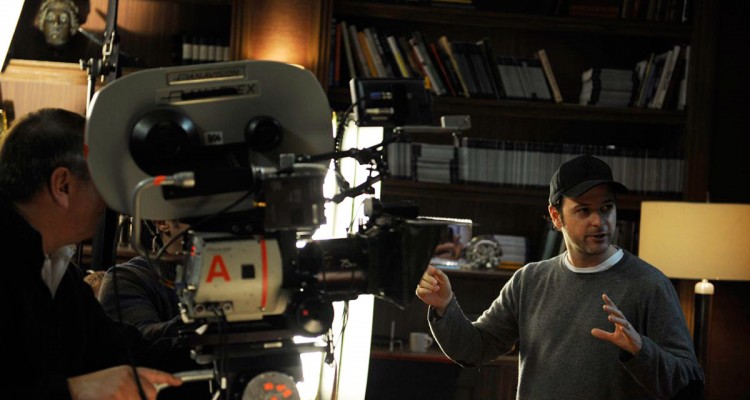
Matthew Vaughn (Director) on set of Kingsman: The Secret Service


Development - This is simply the process of 'finding' a story. Ideas for films come from a variety of sources, they can range from novels, real life events to computer game adaptations. Once you've got an idea you'll need someone to write a pitch for you which you take to a film producer in an attempt to get some funding to make your film. Even at this very early stage you need a very clear idea of who you're aiming you film at so you can include elements that will appeal to them.

Pre-production - Once you've got funding you establish your budget and can begin to get a film crew together, you can storyboard the script. You also need break the script down into individual scenes and identify all the locations, props, cast members, costumes, special effects and visual effects needed.

Production - This is simply the process of 'making' the film. Provided you've done your job properly in the pre-production stage making the film should be straight forward. 'Film' is very expensive and difficult to store so an increasing number of film makers are using digital cameras to save money.

Post-production - During this stage you take all the 'film' you've shot and give it to a film editor. They will then begin putting it together. Special effects will be added, a soundtrack will be added, any missing dialogue will be re-recorded and added resulting in a 'rough cut'. This will be shown to the director and a test audience who will offer feedback. Often this causes scenes to be filmed and added or removed.


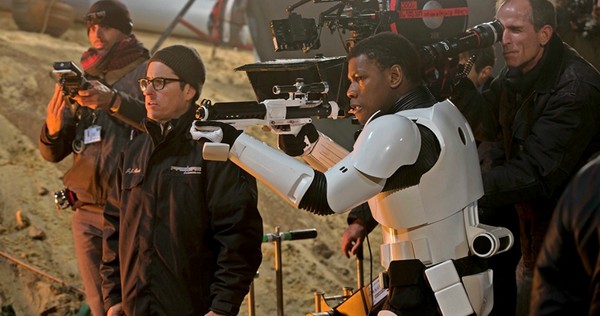
JJ Abrams (Director) on set of Star Wars VII: The Force Awakens

Writer - Person who writes the screenplay of the characters' dialogue and actions taking place on screen.

Producer - Takes care of the business side of a film, which entails pitching the project, obtaining funds and rights as well as managing the budget.

Casting Director - Responsible for selecting the right actor for each role during Pre-Production.

Director - In charge of the creative side of filming, controlling its artistic and dramatic aspects and guiding the technical crew and actors to make the film.

Film Finance -An aspect of production, taking place in its development stage, to determine the film's potential cost and value.

Camera Operator -In charge of preparing the camera equipment and working with the Director to capture the visual style of the film.

Editor - Works with the Director during Post-Production to craft the different sections of the film together.

Production Designer - Works on the visual aspects to the film, like the set and costumes, to ensure they fit the Director's vision.

Marketing -Trying to promote the film, usually involves press tours, interviews, trailers, posters, social media and merchandise.

Exhibition - The public screening of the film, usually at cinemas or theatres but sometimes at festivals like Sundance.